The anatomy view needs WebGL, which this browser has switched off. Every procedure is in the list alongside.

Specialist in brain, nerve & spine surgery · Tehran

Thirty-seven years of experience, one standard.

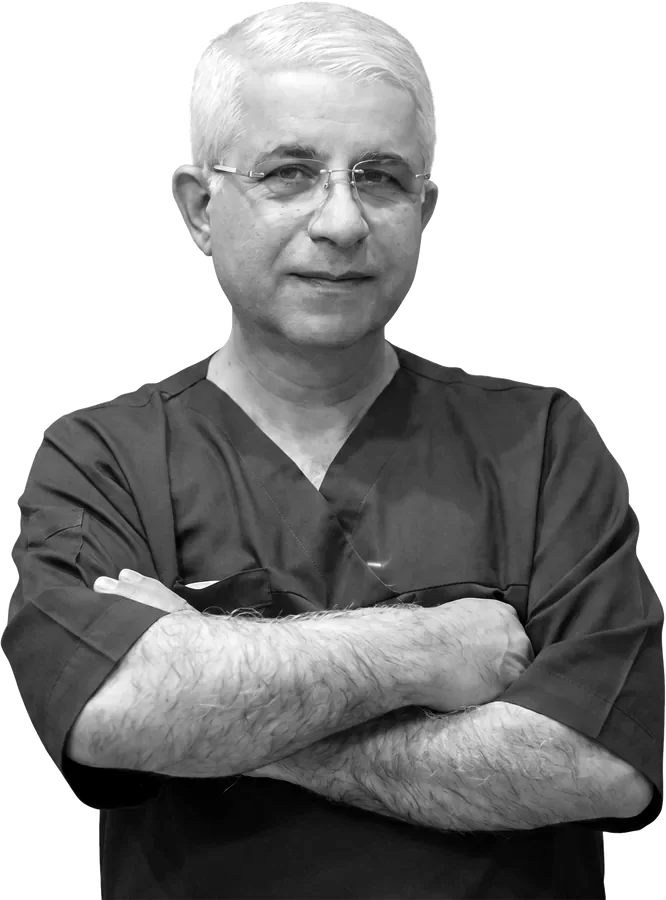
Dr. Masoud Shirvani trained in skull base surgery at the I.N.I. center and in stereotactic surgery in Germany, and has carried out more than 18,700 operations on the brain, pituitary and spine.

Surgical record

Surgeries performed

Every operation, planned to the millimetre.

Years of experience

Brain tumors

Spine surgeries

Pituitary tumors

CPA tumors

Affiliations & memberships

Neurosurgical Society of Iran Tehranpars Specialized Hospital Iranian Medical Council Salamat Farda Hospital

The anatomy he operates on

Brain, nerve and spine, explored layer by layer.

A film of every operation he performs, on a real brain and a real spine: the opening, the lesion, the repair.

  1. Trauma, hematoma and cranioplasty — Evacuation of hematomas, decompression and reconstruction of the skull.
  2. Meningioma — Complete removal of the meningeal tumor, convexity or parasagittal, while preserving the adjacent brain and veins.
  3. Glioma and glial tumors — Maximal removal with awake mapping of language and motor cortex where needed.
  4. Brain metastases — Focused removal of single or multiple deposits, planned with the oncology team.
  5. Aneurysms and vascular lesions — Clipping of aneurysms and removal of malformations under the microscope.
  6. Intraventricular and midline tumors — Endoscopic and neuronavigated removal of colloid cysts and tumors of the ventricles and pineal region.
  7. Hydrocephalus and shunting — Shunt placement or endoscopic diversion of cerebrospinal fluid.
  8. Endoscopic brain surgery — Third ventriculostomy, cyst fenestration and biopsy through a single burr hole.
  9. Pituitary tumors — Removal through the transsphenoidal (endonasal) route while preserving gland function.
  10. Skull base tumors — Chordoma, craniopharyngioma, epidermoid and orbital lesions, the subject of his I.N.I. fellowship.
  11. CPA tumors — Cerebellopontine angle: microsurgical removal preserving the facial and hearing nerves.
  12. Trigeminal neuralgia — Microvascular decompression (MVD) to relieve the vessel pressing on the nerve.
  13. Hemifacial spasm — Microvascular decompression of the facial nerve at the brainstem.
  14. Posterior fossa and cerebellar tumors — Suboccipital approaches to the cerebellum and fourth ventricle.
  15. Chiari malformation — Decompression of the foramen magnum to free the cerebellar tonsils and the cord.
  16. Cervical disc — Anterior cervical discectomy and fusion (ACDF): the disc and any osteophyte are removed through the front of the neck and the space is held with a cage and plate.
  17. Cervical myelopathy — Open-door laminoplasty: the laminae are hinged open and held with small plates, widening the canal without removing the arch.
  18. Cervical fusion — Posterior fixation with lateral mass screws and rods, with bone graft for a solid fusion.
  19. Spinal tumors — Laminectomy, opening of the dura and microsurgical removal of the tumor with neuromonitoring of the cord.
  20. Thoracic disc — Costotransversectomy: the rib head and pedicle are removed to reach a calcified disc from the side, without touching the cord.
  21. Scoliosis & deformity — Pedicle screws at each level, rods contoured to the correction, and the curve straightened before fusion.
  22. Lumbar disc — Microdiscectomy: a small window between the laminae, the nerve root gently retracted, the extruded fragment removed.
  23. Spinal stenosis — Decompressive laminectomy: the spinous process, laminae and thickened ligament are removed to free the nerves, keeping the joints for stability.
  24. Laminectomy — Laminectomy with foraminotomy: the roof of the canal and the narrowed foramen are opened to release the nerve root.
  25. Lumbar fusion — Transforaminal interbody fusion (TLIF): pedicle screws, removal of the disc, a cage packed with bone and rods to stabilize the segment.

About the doctor

A surgeon's career, in one line.

Dr. Masoud Shirvani was born in Isfahan in 1958. He completed his medical degree and his neurosurgery residency at Isfahan University of Medical Sciences, and began his professional career there after finishing his residency.

He completed subspecialty training in skull base surgery and stereotactic surgery at the I.N.I. center in Germany, and a course in brain and skull base endoscopy in Switzerland. He is a board member of the Neurosurgical Society of Iran.

He has served as head of the neurosurgery department and secretary of the neurosurgery congress at Milad Hospital, with a record of more than 18,700 brain, pituitary and spine operations.
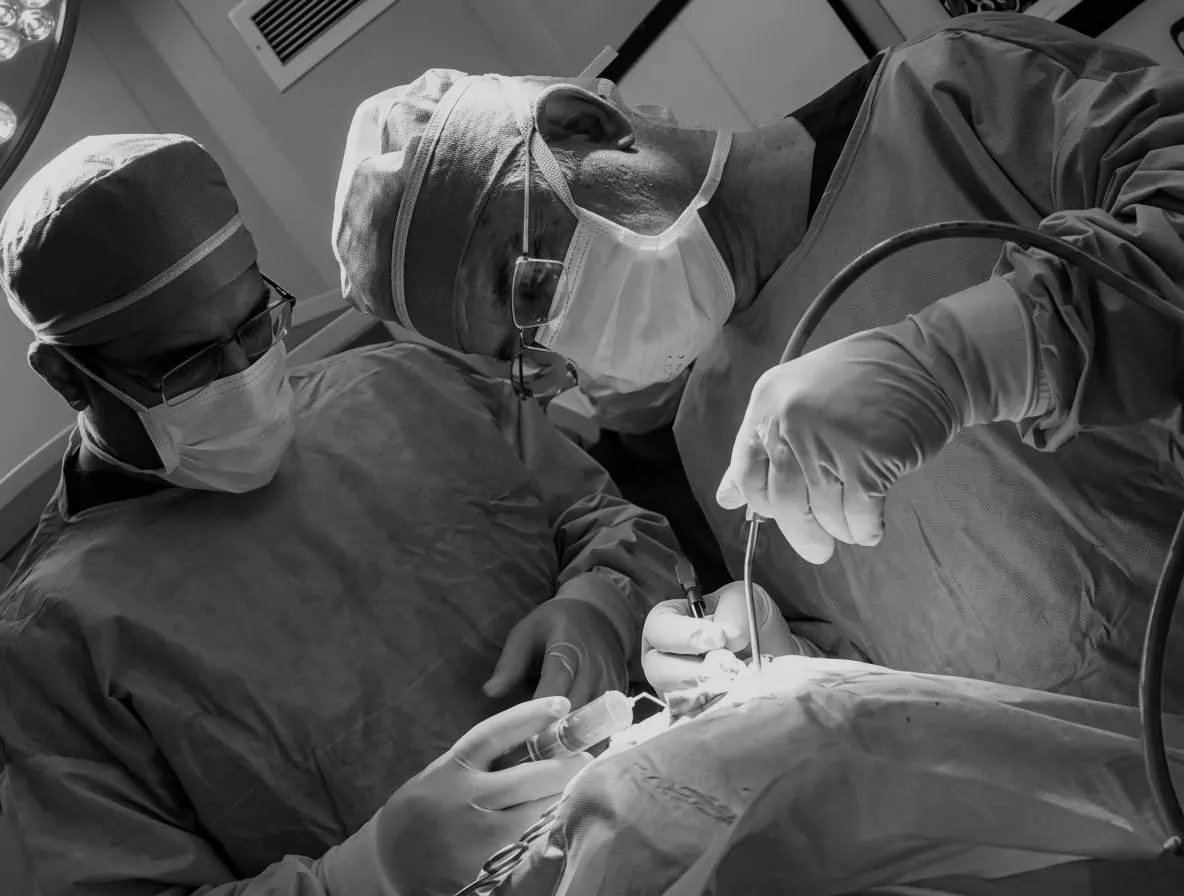
In the operating room

Education & fellowships

  • MD and neurosurgery residencyIsfahan University of Medical Sciences
  • Skull base surgery fellowshipI.N.I. Center, Germany
  • Stereotactic surgery fellowshipGermany
  • Brain and skull base endoscopy courseSwitzerland

Academic & leadership roles

  • Board memberNeurosurgical Society of Iran
  • Head of the neurosurgery departmentMilad Hospital
  • Secretary of the neurosurgery congressMilad Hospital
  • Assistant professorIsfahan University of Medical Sciences, 1995 to 1999
  • Assistant professorKashan University of Medical Sciences, 1992 to 1994

Areas of focus

  • Brain tumors
  • Skull base tumors
  • Pituitary tumors
  • CPA tumors
  • Meningioma
  • Glioma and glial tumors
  • Brain metastases
  • Posterior fossa and cerebellar tumors
  • Intraventricular and midline tumors
  • Endoscopic brain surgery
  • Trigeminal neuralgia
  • Hemifacial spasm
  • Chiari malformation
  • Hydrocephalus and shunting
  • Aneurysms and vascular lesions
  • Trauma, hematoma and cranioplasty
  • Cervical, thoracic and lumbar disc
  • Spinal canal stenosis
  • Cervical myelopathy
  • Lumbar and cervical fusion
  • Spinal cord and spine tumors
  • Scoliosis and deformity

Warning signs

Seek care immediately if you notice these.

01

A sudden, unprecedented headache

"The worst headache of my life", a stiff neck, nausea, sensitivity to light or reduced consciousness. This can be a subarachnoid hemorrhage and is an absolute emergency.

02

Loss of bladder or bowel control with leg weakness

Incontinence or retention, saddle numbness in the groin and buttocks, or rapid weakness of both legs. This can be cauda equina syndrome; surgery is urgent within the first hours.

03

Deterioration after a head injury

Reduced consciousness, repeated vomiting, seizures or one dilated pupil after a blow to the head. An immediate surgical emergency.

04

Severe headache with sudden vision loss

A very severe, sudden headache with double vision or loss of vision can be a sign of pituitary apoplexy, a surgical emergency.

05

Weakness after a neck injury

Limb weakness or breathing difficulty after a neck injury. Immobilize the neck and get evaluated immediately.

06

Sudden loss of consciousness on changing position

Or an explosive headache when moving the head, which can mean an acute blockage of cerebrospinal fluid flow.

In any of these situations, go to the nearest emergency department or call emergency services first. The clinic can be reached afterwards for follow-up.

Publications

Published work.

Publications

Citations

Years of research

Google Scholar profile ↗

Appointments

Book an appointment.

Call the clinic for a brain or spine surgery consultation. Office hours are Saturday to Wednesday, 9 to 17, and Thursday, 9 to 13.

Office hours

Office

Phone